Understanding UV Ratings for Shade Sail Fabrics
Why layered sun protection starts with engineered shade.
When it comes to creating safer outdoor environments, not all shade is equal. The effectiveness of a shade fabric depends on how well it blocks harmful ultraviolet (UV) radiation - the leading cause of sunburn, skin damage, and long-term health risks.
In Australia and New Zealand, the Slip, Slop, Slap, Seek, Slide message from Cancer Council has become part of everyday life: Slip on protective clothing, Slop on sunscreen, Slap on a hat, Seek shade, and Slide on sunglasses.
Each layer plays an essential role, but only one provides consistent, all-day protection that can't be removed, doesn't wear off or wash away: engineered shade. That's where UVE ratings come in.
At GALE Commercial, we design shade fabrics that perform in the world's harshest UV conditions and meet the strictest testing standards. Here's what you need to know about how UV protection is measured, and why it matters when specifying or installing commercial shade structures.
What Does a UVE Rating Mean?
UVE stands for Ultraviolet Effectiveness and is expressed as a percentage. This percentage shows how much of the sun's UV radiation is blocked by the fabric, in other words, how much protection it provides.
Protection Categories Based on UVE% (AS4174:2018, Table 3.1):
- 80.0 to 90.9% UVE: Effective
- 91.0 to 94.9% UVE: Very Effective
- 95.0% UVE and above: Most Effective (all-day protection)
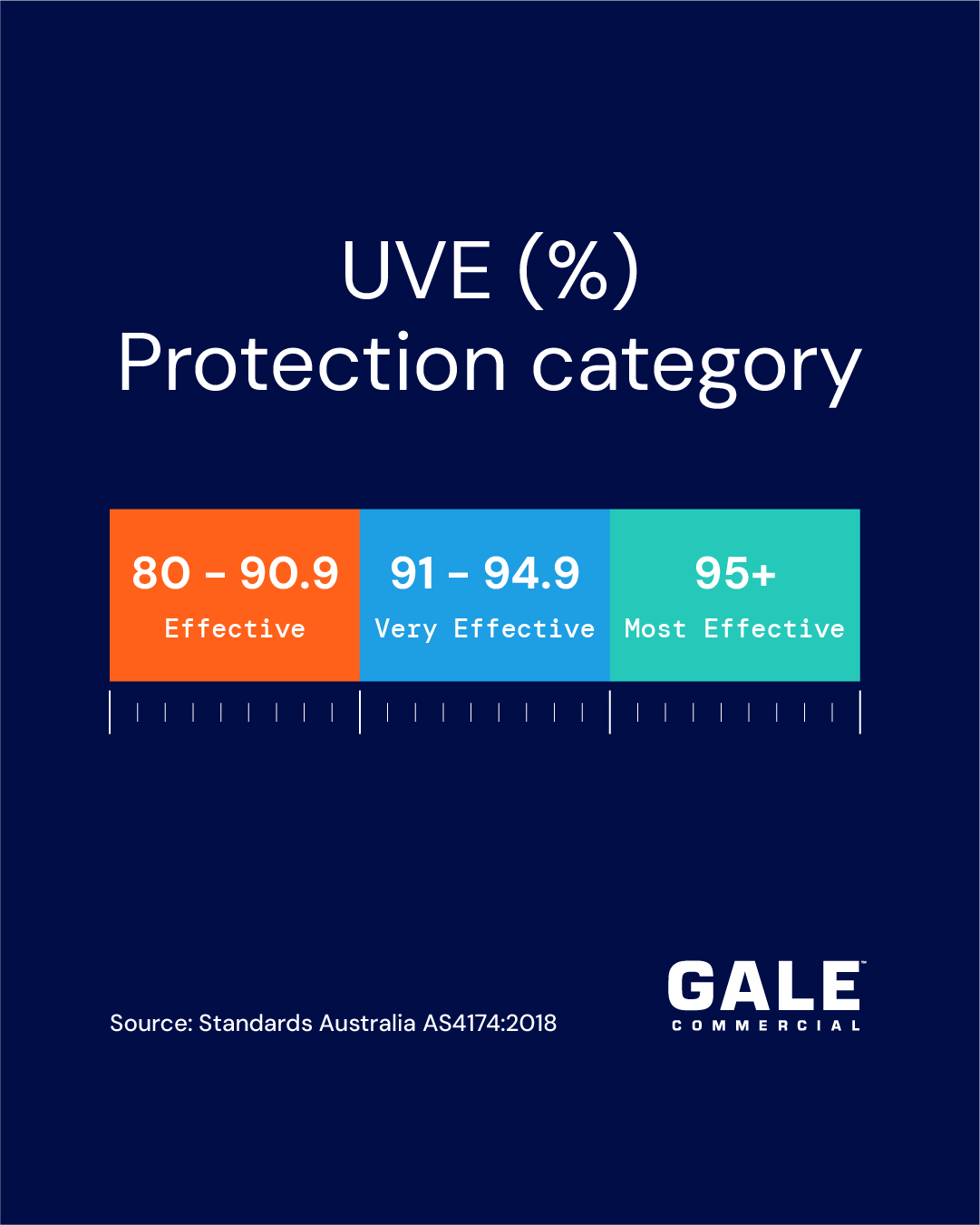
For example, a UVE rating of 95% means the fabric is 95% effective at protecting against harmful UV rays. At GALE Commercial, our shade fabrics are independently tested and rated up to UVE 96%, offering proven performance and long-term reliability for schools, playgrounds, community spaces, and public facilities.
How It's Measured
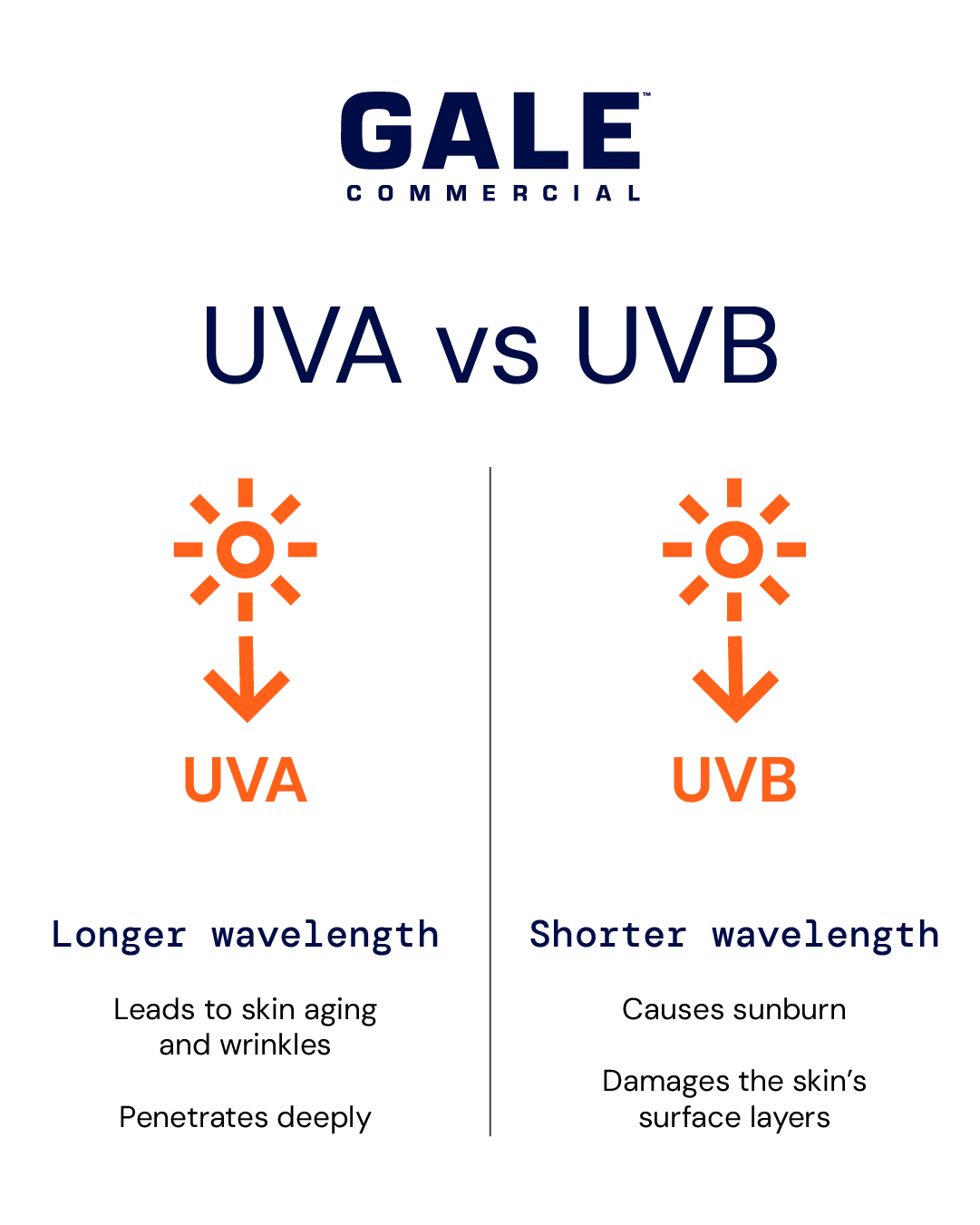
Shade sail fabric UVE ratings are determined through laboratory testing to AS4174:2018 for Knitted and Woven Shade Fabrics. This standard measures protection against both UVA (which penetrates deeply and causes skin ageing) and UVB (which burns the skin's surface).
Fabrics may also be tested for Strength and UV degradation resistance, ensuring they continue to perform effectively after years of exposure. That means the protection you specify today continues to perform year after year.
Previously, shade sail fabrics were testing under AS4399:2020, the standard for sun protective clothing that uses the Ultraviolet Protection Factor (UPF) system. However, because clothing sits close to the skin, the UPF method doesn't account for scattered of reflected UV light that can enter around the edges of a shade structure. For this reason, AS4399:2020 is no longer appropriate for evaluating shade fabrics, and using UPF ratings for shade sails is incorrect.
UVE vs UPF vs SPF
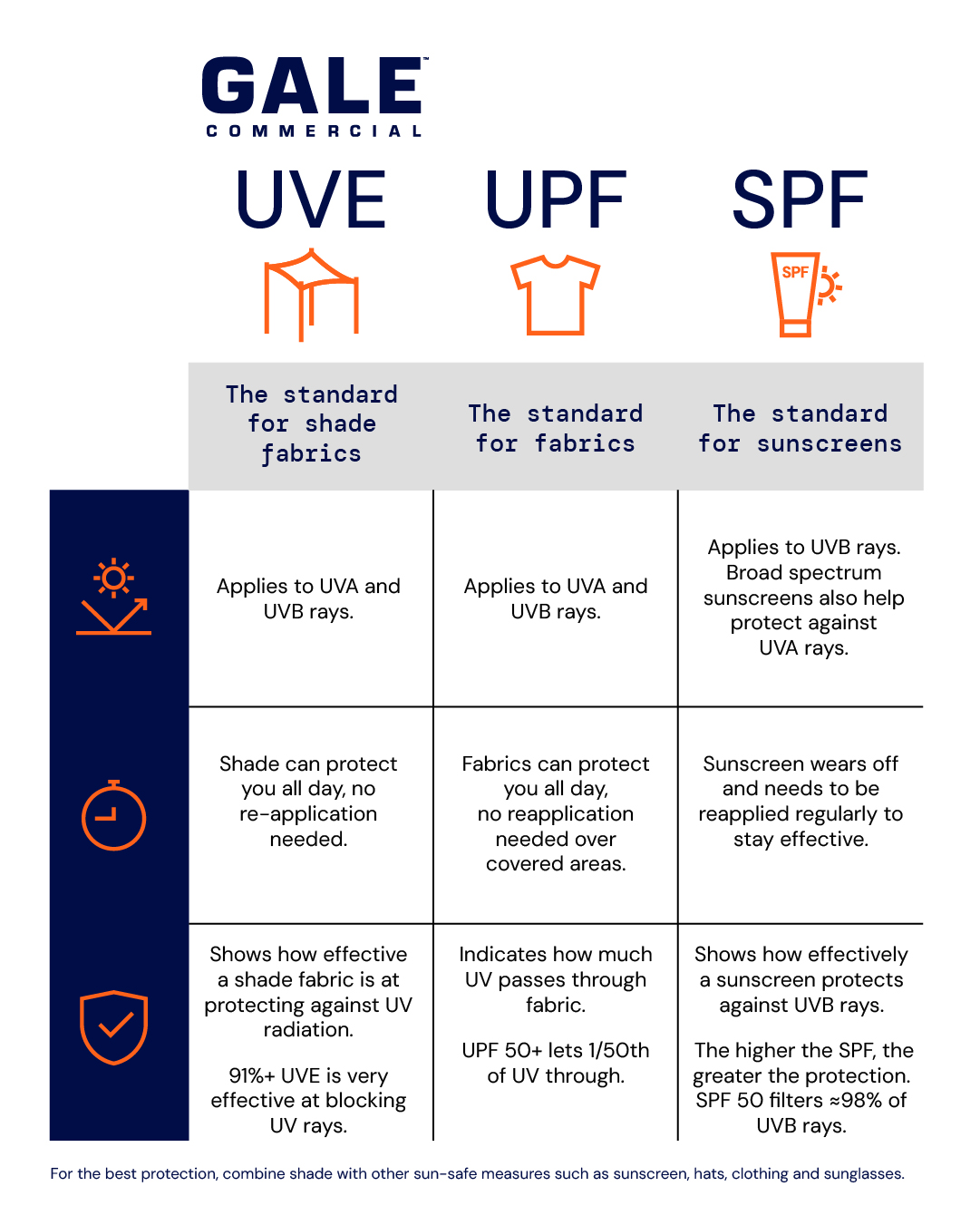
While UVE and UPF both measure protection from UV radiation, they apply to different uses:
- UVE Rating: Measures how well shade fabrics block UV in open outdoor environments.
- UPF (Ultraviolet Protection Factor): Applies to clothing worn close to the skin. For example, a UPF 50 fabric only allows 1/50th of UV rays to pass through, roughly 98% protection.
- SPF (Sun Protection Factor): Applies only to sunscreen and measures how long the skin is protected from damage compared to unprotected skin.
For outdoor structures, UVE is the correct standard because it accounts for reflected and scattered light, not just direct exposure.
Why Shade Is an Essential Layer of Protection
Australia and New Zealand experience some of the highest UV levels in the world. Skin damage can occur in minutes, even on cloudy days. That's why engineered shade is a cornerstone of the Slip, Slop, Slap, Seek, Slide approach - it complements sunscreen, clothing and hats, rather than replacing them.
"Shade provides consistent, reliable protection that sunscreen alone can't maintain." says Tori Caskie, Senior Product Manager at GALE Pacific. "Our fabrics are engineered to block up to 96% of harmful UV rays while maintaining airflow and long-term stability. It's protection that performs in the conditions where Australians and New Zealanders live, learn and work."
Built to Perform — and Built to Last
Under AS4174:2018, fabrics are tested not just for initial UV protection but also for how well they maintain that protection over time.
GALE Commercial fabrics are solution-dyed and UV-stabilised, meaning colour and protection are integrated into every fibre. Even after years in Australia's and New Zealand's tough conditions, our fabrics retain their performance and appearance, ensuring reliable protection that lasts.
What to Look for When Specifying Shade
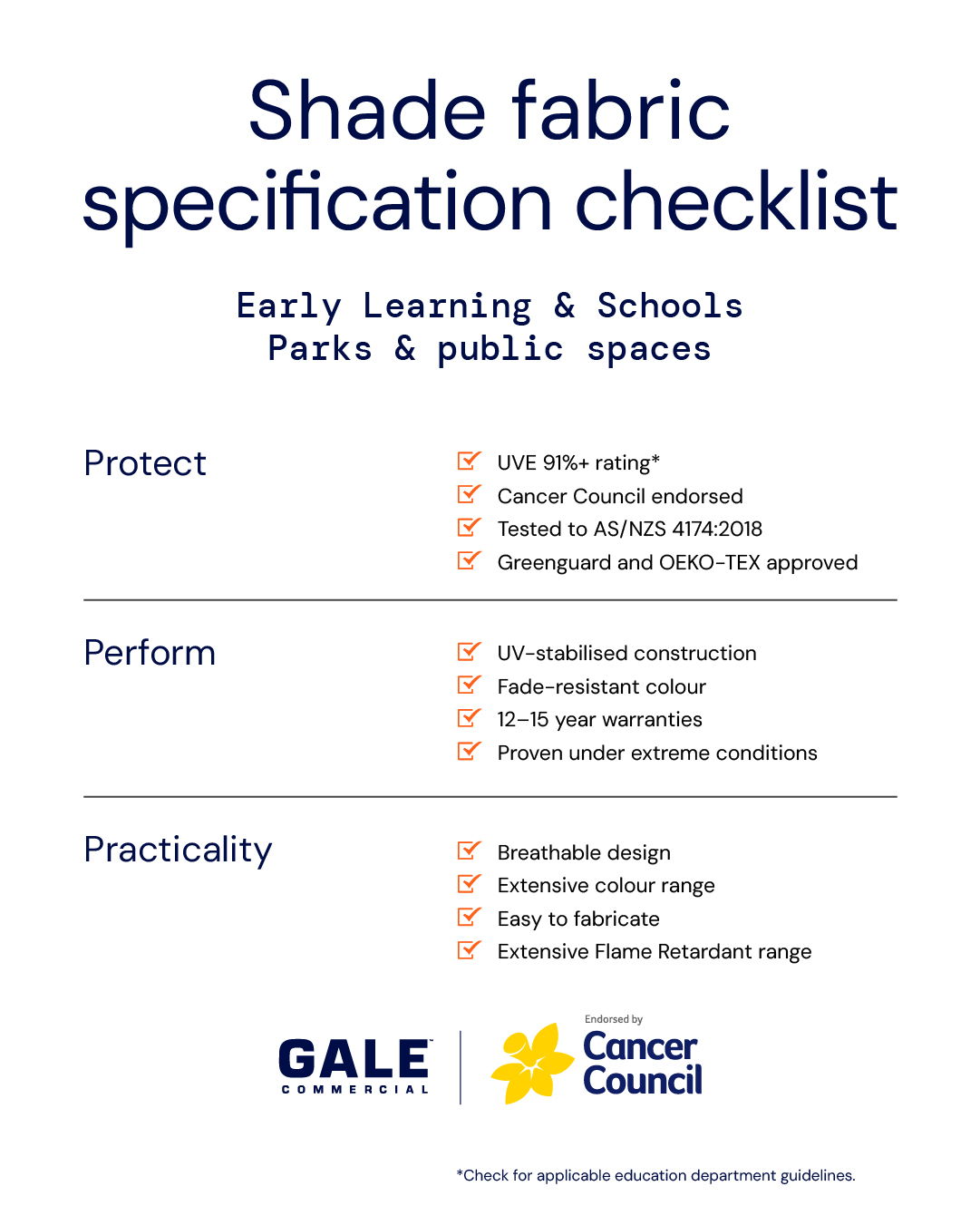
When specifying or sourcing shade fabric for public or commercial environments, look for:
- UVE 90%+ rating: Proven protection from harmful UV radiation.
- Breathable construction: Fabrics that foster airflow and stay cooler underneath.
- Strength and Stability: Fabrics are appropriately engineered to withstand extreme weather conditions over their lifetime.
- Durable fibres: Solution-dyed, UV-stabilised construction that resists fading and degradation.
- Trusted testing and endorsements: Products tested to Australian Standards and endorsed by Cancer Council Australia for proven performance.
- Tailored Options: A breadth of fabric colour and style options, inclusive of Flame Retardant functionality, where required.
Why It Matters
Choosing a fabric with a proven UVE rating isn't just a compliance box to tick, it's about protecting communities, staff and students in environments where safety is non-negotiable. High-quality, tested fabrics ensure lasting performance and help create safer, more comfortable spaces for everyone who uses them.
Trusted to Protect, Proven to Perform
GALE Commercial is proud to be the only architectural shade fabric manufacturer endorsed by Cancer Council Australia. Our fabrics are engineered to deliver the highest standards of UV protection, durability and design performance - helping councils, architects and fabricators build safer, sun-smart environments across Australia and New Zealand.
Explore GALE Commercial Shade Solutions
Disclaimer:
WARNING: SHADE DOES NOT PROVIDE 100% PROTECTION.
Even under shade, some UV can reflect off surfaces like concrete, water or sand. Always combine shade with other forms of protection such as protective clothing, sunscreen, a hat and sunglasses for complete sun safety.
Subscribe to GALE Commercial
By clicking 'Submit,' you consent to receive email messages from GALE Commercial.
For more information, see our privacy policy.
